
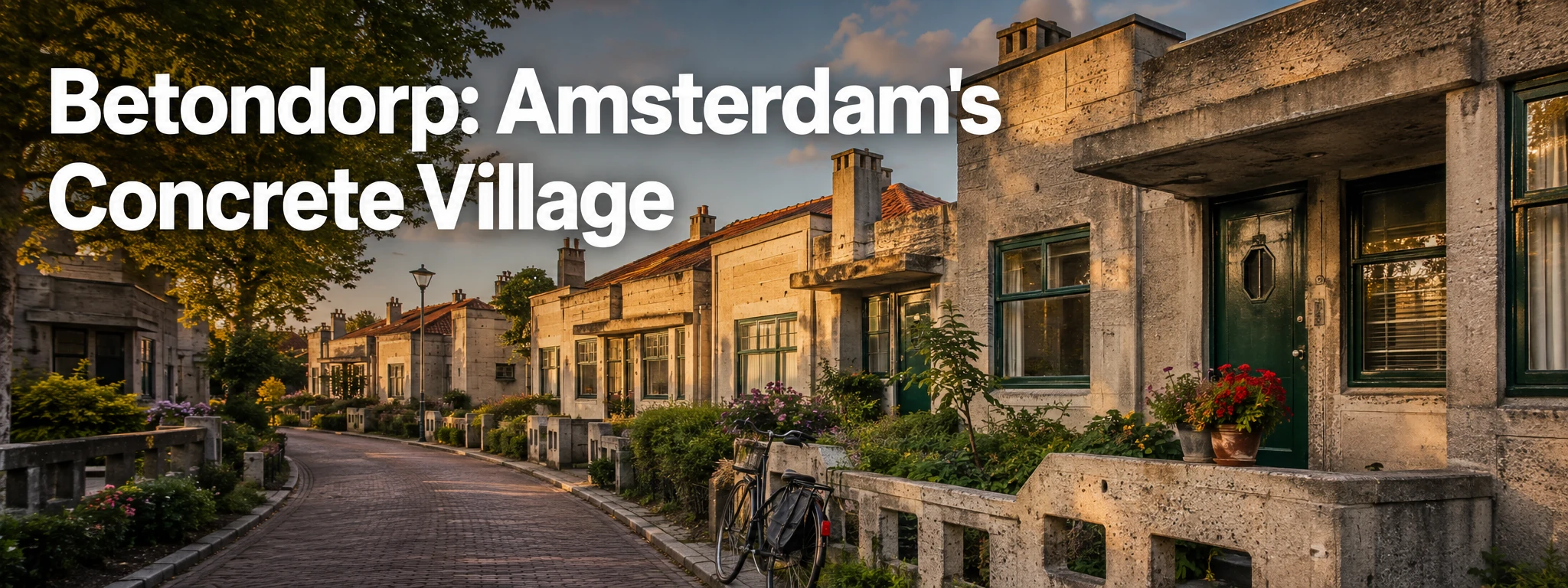
Betondorp was built in the early 1920s as a genuine experiment: could poured and prefabricated concrete construction methods, still new at the time, produce affordable housing faster and cheaper than traditional brick? The result is a small, distinctive village-like neighborhood near Watergraafsmeer, covered in our garden suburb guide, with a character genuinely unlike anywhere else in Amsterdam.
Why it looks different from everywhere else
Unlike the brick-dominated architecture found almost everywhere else in the city, Betondorp's houses use visible concrete construction — different textures, different proportions, and a distinctly experimental, almost utilitarian look that stands out immediately once you know to look for it.
This is a genuinely small neighborhood — a 20–30 minute walk covers the core streets thoroughly, making it easy to combine with nearby Watergraafsmeer into one outing rather than a separate trip.
Did the experiment work?
Mixed results, historically — some construction techniques proved durable, others less so, and the concrete experiment wasn't broadly repeated at this scale elsewhere in the city. That mixed legacy is part of what makes it a genuine historical curiosity today rather than a template that shaped later Amsterdam housing.
Is it worth a visit?
A genuine niche interest stop — worth 30 minutes for anyone specifically curious about early 20th-century housing experiments or architectural history, easily combined with Watergraafsmeer. Not a priority for a typical first-time visit.
Getting there
A tram ride of about 20–25 minutes from the center, most easily combined with the Watergraafsmeer guide's route on the same side of the city.
This guide is kept accurate and up to date. Last updated: August 2026 — written by the Totally Amsterdam Team.